
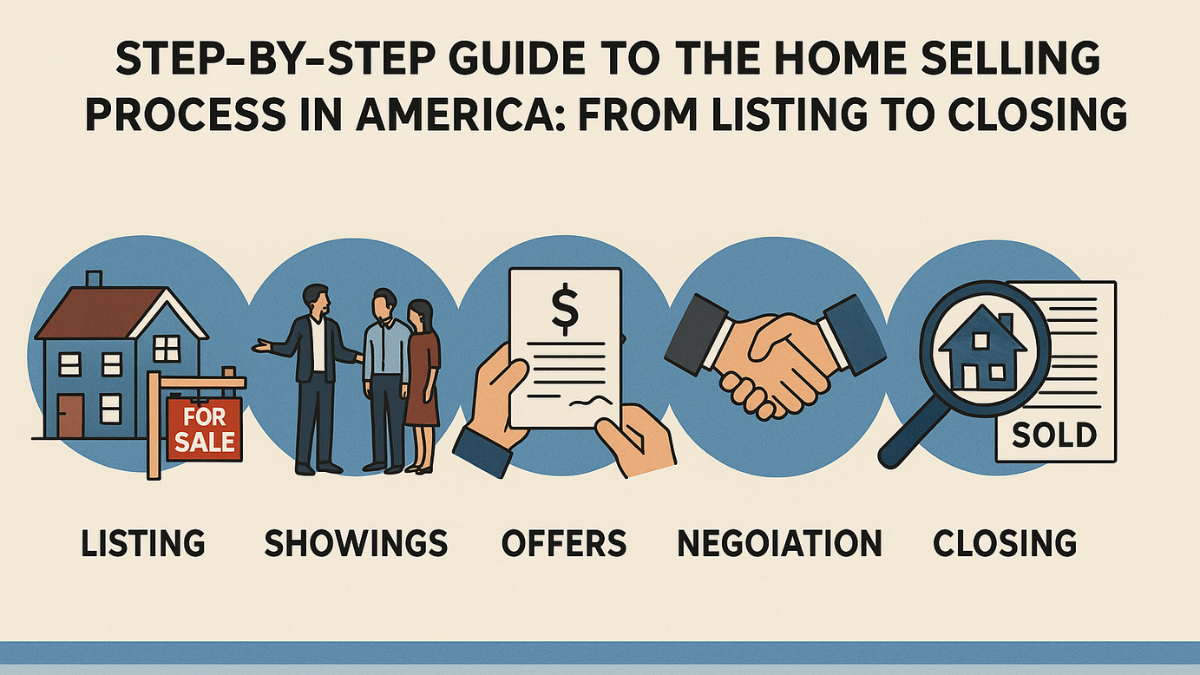
Step-By-Step Guide To The Home Selling Process In America: From Listing To Closing
Introduction
Selling a home in the United States is a significant undertaking that involves careful planning, legal documentation, and financial decision-making. Whether you’re a first-time seller or an experienced homeowner, understanding each step in the home selling process ensures smoother transactions and better outcomes.
This comprehensive guide walks you through the key stages of selling a home in the U.S., from preparing your property for listing to handing over the keys at closing.
1. Assess Your Financial Situation
Before you list your home, assess your current financial position:
-
Calculate your mortgage payoff amount to understand potential profits.
-
Estimate selling costs including commissions, repairs, closing costs, and potential taxes.
-
Consider your next living situation (buying, renting, or relocating).
Having a clear picture of your finances sets realistic expectations and helps you make smarter decisions.
2. Prepare Your Home for Sale
Presentation matters. The better your home looks, the more attractive it becomes to potential buyers.
Tasks to complete:
-
Declutter and depersonalize the space.
-
Deep clean every room, including windows and carpets.
-
Make minor repairs (leaky faucets, broken lights, peeling paint).
-
Boost curb appeal with landscaping, paint touch-ups, and a tidy exterior.
-
Consider professional staging to highlight your home’s strengths.
A well-prepared home often sells faster and at a higher price.
3. Determine the Right Listing Price
Pricing your home correctly is crucial. Overpricing may discourage buyers, while underpricing could mean losing potential profits.
To find the right price:
-
Analyze comparable home sales (comps) in your area.
-
Consider current market conditions and buyer demand.
-
Factor in location, condition, size, and unique features.
Pricing competitively from the start increases visibility and buyer interest.
4. Market Your Property Effectively
Once the price is set and the home is ready, it’s time to attract buyers.
Key marketing strategies:
-
Professional photography to showcase your home online.
-
Online listings on popular real estate platforms.
-
Social media promotions and virtual tours.
-
Yard signage, open houses, and brochures.
The goal is to create maximum exposure and generate buyer interest quickly.
5. Show the Home to Potential Buyers
Allowing buyers to view the property is essential.
Tips for successful showings:
-
Keep the home clean and tidy at all times.
-
Use natural light and neutral scents.
-
Be flexible with scheduling for private viewings and open houses.
-
Leave during showings to give buyers space.
The first impression often determines whether a buyer will make an offer.
6. Receive and Negotiate Offers
When a buyer is interested, they will submit a formal offer.
Review all offers carefully, considering:
-
Offer price
-
Financing method (cash or mortgage)
-
Contingencies (inspection, financing, appraisal)
-
Closing timeline
-
Requested repairs or concessions
You can accept, reject, or counter the offer. Be ready to negotiate and keep your priorities clear.
7. Accept the Offer and Sign the Purchase Agreement
Once both parties agree on terms, a purchase agreement is signed. This legally binds the seller and buyer to proceed with the transaction under specific conditions.
The agreement will detail:
-
Purchase price
-
Timeline for inspections and contingencies
-
Closing date
-
Items included in the sale (appliances, fixtures, etc.)
This agreement marks the beginning of the formal closing process.
8. Home Inspection and Appraisal
The buyer typically schedules a home inspection to assess the property’s condition.
If issues arise:
-
You may be asked to make repairs or lower the price.
-
You can negotiate which repairs you’re willing to handle.
If the buyer is financing the purchase, their lender will also order an appraisal to confirm the home’s value. If the appraisal comes in low, price negotiations may reopen.
9. Satisfy Legal and Disclosure Requirements
Sellers in the U.S. must comply with federal and state disclosure laws.
You may need to disclose:
-
Known property defects
-
Environmental hazards (lead paint, mold, asbestos)
-
Neighborhood nuisances
Failure to disclose can lead to legal liability, even after the sale. Be honest and thorough when completing disclosure forms.
10. Closing the Deal
Once all contingencies are cleared and the buyer’s loan is approved, it’s time to close.
The closing process typically includes:
-
Signing the deed and final paperwork
-
Paying off the existing mortgage
-
Paying closing costs (title fees, prorated taxes, agent commission)
-
Transferring keys and property ownership
After closing, the sale is recorded with the county, and the transaction is complete.
Conclusion
Selling a home in America involves multiple steps that must be carefully managed. From preparation and pricing to negotiations and closing, each phase requires attention to detail and good judgment.
Whether you’re relocating, upgrading, or downsizing, a successful home sale depends on smart planning, understanding the market, and being responsive to buyer needs. By following a structured approach, you can maximize your home’s value and complete the sale with confidence.
FAQs
Q1: How long does it take to sell a house in the U.S.?
A: It typically takes 30 to 60 days from listing to closing, but this can vary based on market conditions and buyer financing.
Q2: What are typical closing costs for a home seller?
A: Sellers often pay 6%–10% of the home’s sale price in closing costs, including agent commissions, title fees, and taxes.
Q3: Do I need to hire a real estate agent to sell my home?
A: While not mandatory, an agent can help with pricing, marketing, negotiations, and paperwork, increasing your chances of a smooth and profitable sale.
Q4: What is a contingency in a home sale?
A: Contingencies are conditions included in the offer, such as a home inspection or financing approval, which must be met before the sale is finalized.
Q5: What happens if my home doesn’t appraise for the agreed sale price?
A: You may need to renegotiate the price, request a second appraisal, or the buyer might cover the difference or back out if there’s an appraisal contingency.
Q6: Can I sell my home while still living in it?
A: Yes, many sellers live in their homes during the sale. Just be prepared to keep it clean and available for showings.
Q7: What is earnest money?
A: Earnest money is a deposit made by the buyer to show serious intent. It is applied to the purchase at closing or returned if the deal falls through under agreed contingencies.